Selling products in the EU offers access to one of the largest markets globally. However, it is also one of the most regulated. Many companies underestimate the requirements, assuming certification or logistics setup is enough. In reality, compliance is structural — and must be demonstrable at any time.
The Core Principle of EU Market Access
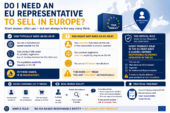
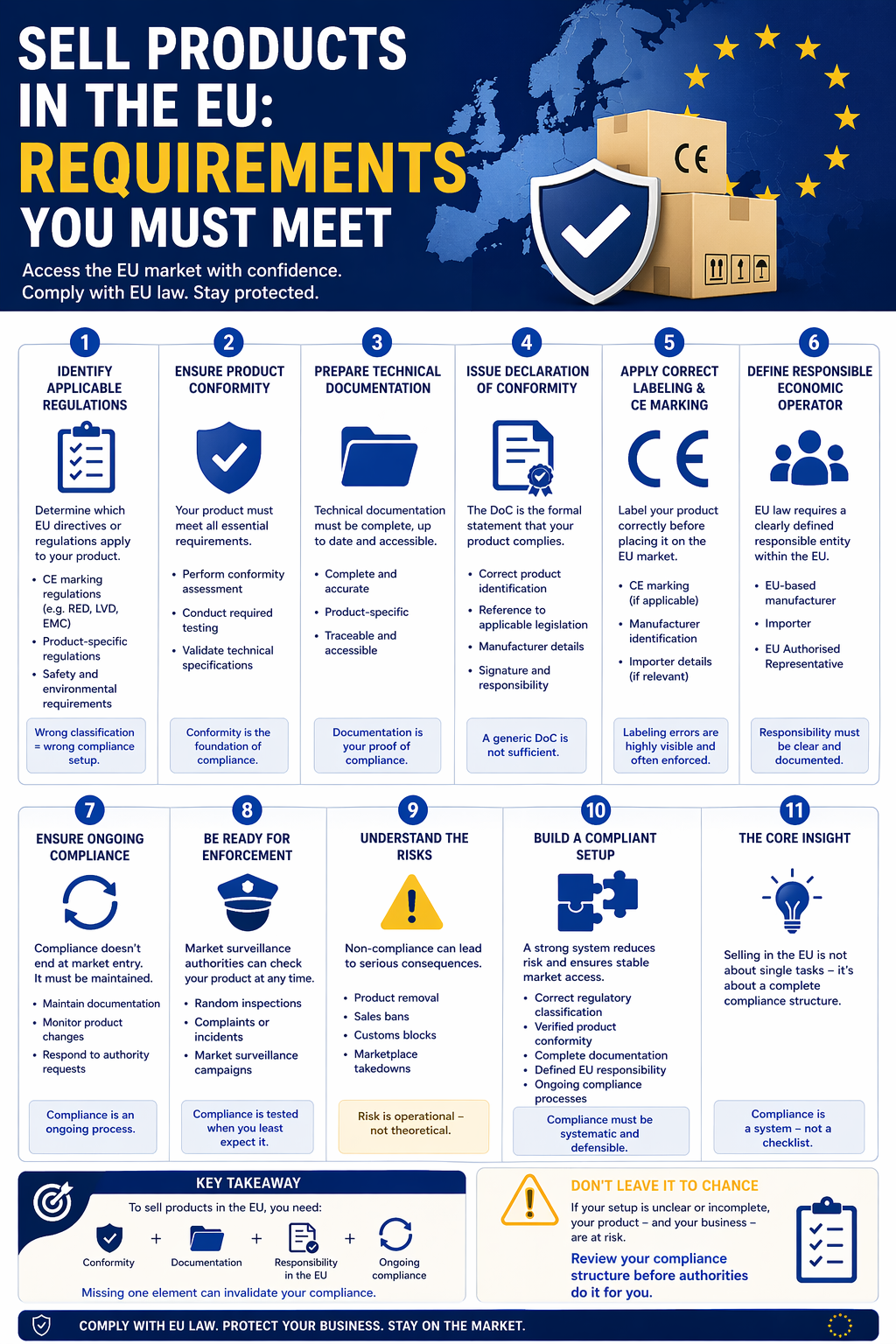
EU law is based on a simple but strict rule: every product placed on the market must comply with applicable regulations and have a clearly defined responsible economic operator within the EU. This ensures traceability, accountability, and enforcement capability.
No responsible EU entity = no compliant product
Identify the Applicable Regulations
Before selling in the EU, you must determine which regulations apply to your product. Requirements vary depending on the product category, technology, and risk level. This step defines all further compliance obligations.
Typical frameworks include:
- CE marking directives/regulations (e.g. RED, LVD, EMC)
- Product-specific regulations
- Safety and environmental requirements
Wrong classification = wrong compliance setup.
Ensure Product Conformity
Once the applicable regulations are identified, the product must meet all technical requirements. This includes testing, risk assessment, and conformity evaluation. Compliance must be proven — not assumed.
Key steps:
- Perform conformity assessment
- Conduct required testing
- Validate technical specifications
Conformity is the foundation of compliance.
Prepare Technical Documentation
Technical documentation is a mandatory requirement and must be complete, structured, and accessible. Authorities can request it at any time, and it must be provided without delay. Missing or inconsistent documentation is one of the most common compliance failures.
Documentation must be:
- Complete and accurate
- Product-specific
- Traceable and accessible
Documentation is your proof of compliance.
Issue the Declaration of Conformity
The Declaration of Conformity (DoC) is the formal statement that your product complies with EU requirements. It must be correctly structured and aligned with the product and applicable regulations.
Requirements for the DoC:
- Correct product identification
- Reference to applicable legislation
- Manufacturer details
- Signature and responsibility
A generic DoC is not sufficient.
Apply Correct Labeling and CE Marking
Products must be properly labeled before entering the EU market. This includes CE marking (where required), manufacturer details, and other regulatory information. Labeling must be accurate, visible, and consistent with documentation.
Key elements:
- CE marking (if applicable)
- Manufacturer identification
- Importer details (if relevant)
Labeling errors are highly visible — and frequently enforced.
Define the Responsible Economic Operator
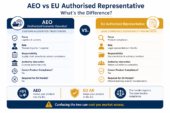
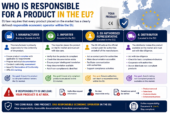
EU law requires a clearly defined responsible entity within the EU. This is a central requirement and one of the most common gaps in real-world setups. Without this, compliance is considered incomplete.
Possible responsible entities:
- EU-based manufacturer
- Importer
- EU Authorised Representative
Responsibility must be clear and documented.
Ensure Ongoing Compliance
Compliance does not end at market entry. Products must remain compliant throughout their lifecycle. This includes handling updates, incidents, and authority requests.
Ongoing obligations:
- Maintain documentation
- Monitor product changes
- Respond to authority requests
Compliance is an ongoing process.
The Reality of Enforcement
Many companies assume that compliance is only checked at customs. In reality, enforcement often happens later through market surveillance. This is when the full compliance structure is tested.
Typical triggers:
- Random inspections
- Complaints or incidents
- Market surveillance campaigns
Compliance is tested when you least expect it.
The Risks of Non-Compliance
Failure to meet EU requirements can lead to immediate consequences. These risks often affect not just one product, but the entire product portfolio.
Possible consequences:
- Product removal
- Sales bans
- Customs blocks
- Marketplace takedowns
Risk is operational — not theoretical.
How to Build a Compliant Setup
A compliant structure requires more than isolated actions. It requires a coordinated system where all elements work together. Companies that approach compliance structurally reduce risk and ensure stable market access.
A robust setup includes:
- Correct regulatory classification
- Verified product conformity
- Complete documentation
- Defined EU responsibility
- Ongoing compliance processes
Compliance must be systematic and defensible.
The Core Insight
Selling products in the EU is not about meeting individual requirements in isolation. It is about building a complete compliance structure that aligns with EU law. Missing one element can invalidate the entire setup.
👉 Compliance is a system — not a checklist
Final Thought
Accessing the EU market is straightforward in theory, but demanding in practice. Companies that understand and implement the full set of requirements gain long-term stability. Those that rely on assumptions face enforcement risks.
- Certification alone is not enough
- Structure defines compliance
If you are unsure whether your setup is compliant:
👉 We offer a structured compliance screening for non-EU manufacturers.
- review of your current setup
- identification of gaps
- clear recommendations
Contact us to assess your EU compliance status before authorities do.
_______
Tätigkeiten, die der Gesetzgeber Rechtsanwälten, Steuerberatern,
Wirtschaftsprüfern und anderen besonderen Berufsgruppen vorbehalten hat,
gehören gemäß unseren Mandatsvereinbarungen ausdrücklich nicht zu unserem
Mandatsumfang. Werden solche Tätigkeiten erforderlich, so vermitteln wir
unserem Mandanten uns bekannte, seriöse Beratungskollegen aus den
zugelassenen Berufsgruppen.
Unsere Tätigkeit erstreckt sich ausschließlich auf die Ermittlung von
wirtschaftlichen Sachverhalten im Rahmen unseres unternehmens- und
wirtschaftsberatenden Mandates sowie die Vor- und Aufbereitung der aus der
Ermittlung dieser wirtschaftlichen Sachverhalte resultierenden
Entscheidungen und Unterlagen.
Unsere Ratgeber weisen Ihnen den Weg bei beruflichen Problemen. Daher haben
praxisrelevante Fälle für Sie herausgesucht und exemplarisch beantwortet –
ohne Anspruch auf inhaltliche Vollständigkeit. Bitte bedenken Sie, dass
nicht alle denkbaren Besonderheiten des Einzelfalls berücksichtigt sein
können. Die Lektüre des Ratgebers ersetzt keine individuelle Beratung.

_______
Als Werbe-Partner verdienen wir an qualifizierten Käufen von Affiliate-Programmen ( siehe unsere Datenschutzbestimmungen ). Für Sie verändert sich der Preis nicht.
- Auxmoney – 50.000 € Kredite für Selbständige
- SCHUFA-neutraler Kreditvergleich für Selbständige
- AGB-Sicherheitspakete für Online-Händler
- Gasanbieter wechseln – bis zu 750 € sparen
- Stromanbieter wechseln – bis zu 440 € sparen
- Private Krankenversicherung – offizieller Tarifrechner
- Kfz-Versicherung – bis zu 850 € sparen
- Haftpflichtversicherung – bis zu 70 % sparen
- Hausratversicherung – TÜV „sehr gut“
- Rechtsschutzversicherung online berechnen
- DSL-Verfügbarkeitscheck
- Pauschalreisen günstig buchen
- Mietwagen-Preisvergleich